The Human Stories Behind Historic Houses
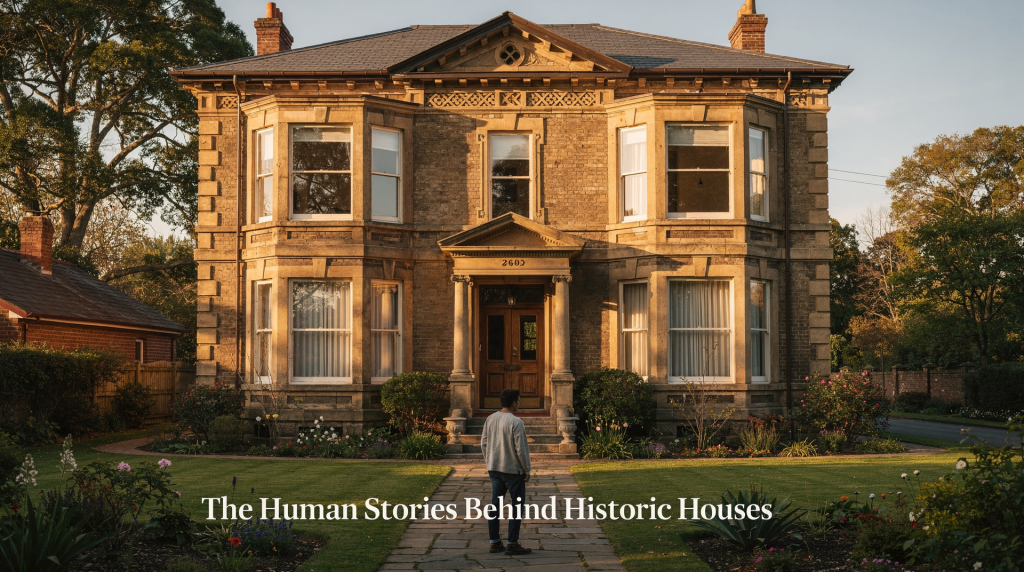
Historic houses are often admired for their facades, floor plans, and preserved details, but the real value of these places lives in the people who moved through them. If you want to understand a historic house properly, you have to look beyond the architecture and ask who lived there, how the space was used, and what the building has witnessed over time.
That human layer is what turns a property into a story. It also gives designers, photographers, researchers, and homeowners a practical way to read a house more clearly. When I walk into an old building with a loaded film back, I’m not looking for a perfect composition first — I’m listening for the echoes of daily rhythms that wore down the floorboards and left their signature in the patina.
Why historic houses matter beyond their walls
A historic house is not just an old building. It is a record of daily life, local change, and social history. Preservation resources consistently point to a mix of oral histories, documents, and physical evidence as the best way to reconstruct a house’s past. You can’t get the full picture from a single source — the archive tells you dates, but the building itself tells you how people actually moved through the light.
That matters because the same room can mean different things in different eras. A kitchen may have been the center of labor, a dining room may have reflected status, and a hallway may have shaped how a family received guests. Once you start reading a house this way, the building becomes evidence, not just decoration. When I’m metering a scene on medium format, I’m constantly aware that the light falling across a worn threshold right now is the same quality of light that fell there a hundred years ago — film picks up that continuity in a way digital sensors often flatten.
Historic houses also matter because they preserve overlooked stories. Museums and heritage organizations increasingly emphasize that interpretation should move beyond a single “founder’s family” narrative and include broader social histories, including labor, class, race, and community context. The servant’s staircase matters as much as the grand entrance hall — sometimes more, because those narrow, unadorned passages carry the weight of the people who actually kept the house running.
What counts as a “human story” in a historic house?
A human story is any trace of how people lived in, changed, or remembered a place. It can be large or small. The beauty of working with film in these spaces is that grain and texture naturally draw your eye to the evidence — a polished handrail, a patched section of plaster, the ghost of a removed wall.
- Who built the house and who paid for it
- Which families occupied it over time
- How servants, workers, or tenants used the space
- What additions or repairs reveal about changing needs
- Which objects, materials, or marks survived
- What neighbors, descendants, or local residents remember
These stories are often hidden in plain sight. A worn threshold can suggest repeated movement. A patched wall can point to a former doorway. A room that feels unusually formal may have been staged for social power rather than comfort. On 35mm pushed a stop, those material clues gain a kind of urgency — the grain emphasizes the wear, the slight contrast boost makes the history feel present rather than archival.
How to research the history of a house
The strongest house histories are built from multiple evidence types. One practical framework is to combine oral histories, documented records, inferred information, and physical evidence. This layered approach mirrors how I think about exposure when shooting interiors on film: you’re balancing ambient light, shadow detail, and the character of the stock itself — no single reading gives you the truth.
Start with what the house tells you
Walk through the property slowly and note what is visible before you begin looking at archives. I always do this with a handheld meter and a notebook, sometimes without even unpacking the camera. The first read should be about observation, not documentation.
Look for:
- Changes in flooring, trim, or wall finishes
- Different window styles or hardware
- Signs of blocked-up openings
- Irregular room proportions
- Evidence of extensions, conversions, or repairs
- Patina patterns, wear, and material mismatch
This is useful because the building itself often gives the first clues to how it has evolved over time. The way plaster cracks around a former opening, the subtle shift in floorboard direction where a wall once stood — these are the details that film renders with a kind of honesty. Digital sharpening can make everything look equally important; a good film stock lets the eye settle where the history actually lives.
Then add documentary research
For houses with stronger archival survival, useful records may include contracts, specifications, job files, correspondence, notebooks, diaries, deeds, directories, maps, photographs, and floor plans. When I’m shooting a property that has original architectural drawings, I’ll often photograph them on the same roll as the corresponding rooms — it creates a dialogue between intention and lived reality.
Good sources to check:
- Local land records
- Census and directory listings
- Historic maps
- Building permits
- Newspaper archives
- Family papers and letters
- Local historical society collections
- Architectural archives
If a house was designed by a notable architect, specialist archives may hold drawings or supporting documents that explain the original intent and later alterations. Knowing the architect’s vision changes how I frame a space — I’m looking for where the design held and where life pushed back.
Finally, collect oral histories
Oral history is one of the most underrated parts of house research. It captures memories that never made it into public records, including domestic routines, neighborhood change, and emotional attachment. Some of the most affecting images I’ve made came after listening to a former resident describe which corner of the kitchen caught morning light — that knowledge sends you to the right spot at the right hour with the right film stock.
Talk to:
- Current and former residents
- Neighbors
- Family members
- Local preservationists
- Longtime community members
Ask practical questions:
- What rooms were used most often?
- Which parts of the house changed first?
- What repairs, additions, or restorations are remembered?
- Were there stories about specific owners or occupants?
- How did the house function in daily life?
A simple house-history research workflow
- Photograph the property carefully, inside and out.
- Make a room-by-room condition and feature list.
- Identify obvious phases of construction or alteration.
- Search ownership, occupancy, and address records.
- Compare records against physical clues in the building.
- Interview people who know the house or neighborhood.
- Assemble a timeline with confirmed facts and noted uncertainties.
This approach keeps the research honest. It separates what is documented from what is inferred, which is essential in heritage work. The same discipline applies to how I approach a shoot: I separate what the light is actually doing from what I wish it were doing, and I expose for the reality of the space. Pushed Portra 400 in a dim hallway won’t lie to you — it’ll give you exactly what’s there, grain and all.
What the best historic-house interpretation does differently
The strongest interpretation does not freeze a property in one idealized moment. It shows change. That’s why I resist the urge to photograph historic interiors as if they’re museum dioramas — a house that’s still breathing has scuffs, repairs, and layers that deserve to be in the frame.
Modern heritage practice increasingly encourages layered storytelling: architecture, family life, labor history, community memory, and difficult histories can all coexist in one house narrative. The film stocks I choose often reflect this — a cooler emulsion for the formal front parlor, something warmer and more forgiving for the kitchen where life actually happened.
That means a good historic-house story may include:
- The original construction story
- Who benefited from the property
- Who maintained the house
- What economic or social systems shaped it
- How later generations reused it
- Why it survived when similar buildings did not
This broader view makes the house more relevant. It also prevents the common mistake of treating only the “celebrated” occupants as historically important. The housekeeper who spent forty years in the basement kitchen left as much of a mark as the merchant who commissioned the stained glass — you just have to know where to look, and how to expose for the shadows.
Why photographers should care about the human side
For architectural and interior photographers, the human story changes how a house should be photographed. The goal is not just accuracy. It is interpretation. A digital file can record every detail with clinical precision, but a frame of film can suggest how a room felt to the person who lived in it — that’s a different kind of truth.
When you know who used a room and why, you photograph differently:
- You wait for natural light that emphasizes material age rather than flattening it
- You include details that suggest use, not just symmetry
- You frame transitions between old and new elements
- You let imperfections remain visible when they tell the truth of the space
That is especially important for analog work. Film responds beautifully to texture, shadow, and age. Grain, color shift, and soft highlight roll-off can make worn plaster, old wood, and layered paint feel lived-in rather than sterile. When I load a roll of Tri-X for a historic interior, I’m not fighting the grain — I’m using it to amplify the tactile quality of the surfaces. The slight halation around a window frame on Cinestill isn’t a flaw; it’s a reminder that light has been pouring through that opening for decades.
Practical visual cues to look for
- Doorways that reveal circulation patterns
- Staircases that suggest hierarchy and service routes
- Fireplaces and hearths that anchor domestic life
- Built-in storage that indicates daily routines
- Repair marks that show adaptation over time
- Garden views that connect interior life with landscape
These aren’t just compositional elements — they’re evidence. A doorway worn smooth on one side tells you which direction people moved through it most often. A staircase with a tight turn and low headroom wasn’t built for the family; it was built for the staff. When I frame that staircase on medium format, I’m not looking for grandeur — I’m looking for the story embedded in the proportions.
Common mistakes when telling house histories
Reducing the story to one famous owner
A house is larger than its most recognizable resident. Workers, tenants, domestic staff, and later occupants often shaped the building as much as the original owner. I’ve photographed rooms where the most compelling detail wasn’t the ornate mantelpiece but the worn patch of floor where a servant stood to tend the fire — that’s the image that stays with me.
Overclaiming evidence
If a detail is likely but not confirmed, say so. Good research keeps speculation separate from fact. The same restraint applies to how I process film from these projects — I don’t push contrast to make a space look more dramatic than it is. The building’s actual character is enough.
Ignoring uncomfortable history
Many historic houses are tied to inequality, exclusion, land ownership, or exploitative labor. Leaving that out creates a false story. Photographing these spaces honestly means acknowledging that the beauty of the architecture often rests on difficult foundations — the light might be gorgeous, but the context matters.
Treating restoration as erasure
A house does not become more “authentic” by removing every sign of later use. Later layers are part of the history too. I’m drawn to the places where different eras collide — a 1920s addition on an 1840s structure, a 1970s repair in a Victorian hallway. Those juxtapositions are the visual evidence of a building that kept being useful, and film handles that temporal layering with more nuance than any digital sensor I’ve used.
A practical checklist for documenting a historic house
- Record the address, date, and known ownership chain
- Photograph all major elevations and interior rooms
- Note original features and later additions
- Identify evidence of repairs, patching, and replacement
- Gather oral testimony from people connected to the property
- Search archives for drawings, records, and historic images
- Build a timeline with confirmed dates and open questions
- Write a short narrative that connects people, place, and change
This checklist lives in my field bag alongside a spare roll of HP5 and a notebook. The photography and the research feed each other — a detail I notice in the darkroom often sends me back to the archives, and a name I find in a deed sends me back to the house with fresh eyes.
Historic houses as living archives
The best way to think about a historic house is as a living archive. It stores physical evidence, but it also carries memory, identity, and community meaning. Researching it properly means respecting both the facts and the human experience behind them. When I expose a frame of film in an old house, I’m conscious that I’m adding another layer to that archive — a silver halide record of how the light fell on a particular afternoon, through windows that have framed a century of similar afternoons.
For photographers, historians, and anyone drawn to old buildings, that is where the real depth lives. The peeling paint, the narrow hall, the repaired floorboard, the archive note, the family recollection — together they form the house’s true record. Film doesn’t just document that record; it participates in it, carrying forward the same attention to material, light, and time that the builders themselves understood.
FAQ
How do you find the history of a historic house?
Start with the building itself, then check land records, census data, maps, directories, newspapers, and archival collections. Add oral histories to fill gaps and confirm context. The building will tell you things the documents can’t — and vice versa.
What is the most reliable source for house history?
No single source is enough. The most reliable histories combine documents, physical evidence, and firsthand memories. It’s like metering a complex interior: you need incident and reflected readings, and you still have to make a judgment call based on what you know about your film stock.
Why are oral histories important for historic houses?
Oral histories capture lived experience, family memory, and neighborhood knowledge that may never appear in written records. A former resident’s description of where the Christmas tree always stood might seem trivial, but it tells you which room held the family’s emotional center — and that’s where you point the camera.
What should I photograph in a historic house?
Focus on architectural details, signs of change, circulation patterns, repair marks, and material texture. These details help connect visual evidence to the property’s history. Look for the wear patterns, the material transitions, the places where human hands and feet have literally shaped the surfaces.
How do historic houses stay relevant today?
They stay relevant by telling broader stories — not just architecture, but also labor, community, inequality, adaptation, and memory. A house that only tells one story is a museum piece. A house that tells many stories is still alive, and that’s the kind of space worth loading film for.