What Film Teaches Me About Patience
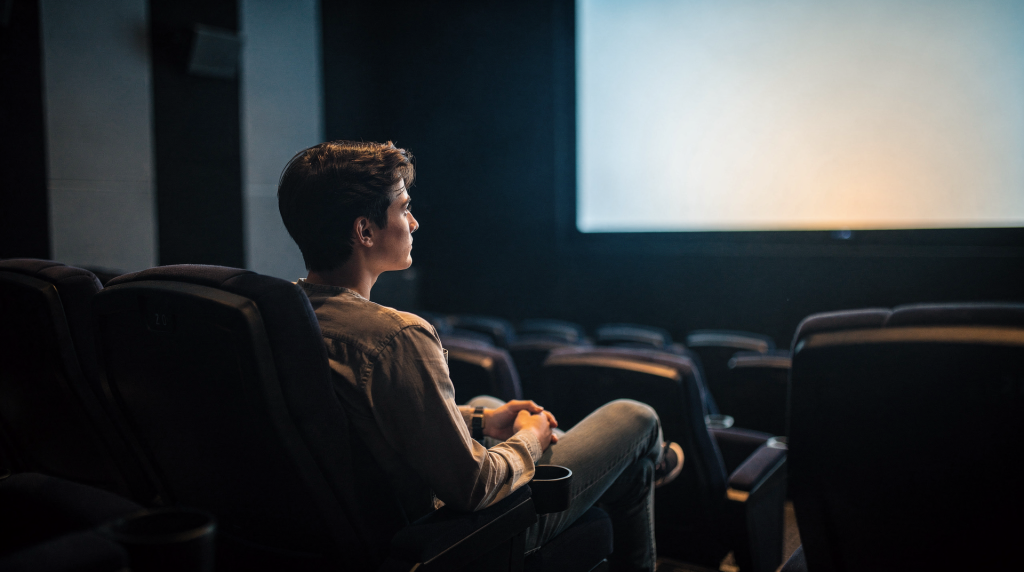
Film photography has a way of slowing everything down without asking permission. You load a roll, advance the lever, and suddenly you’re operating on the medium’s schedule, not yours. In architectural work, that enforced slowness isn’t a limitation — it’s often the very thing that lets a space reveal its real character. The worn floorboards catch light differently when you wait an extra ten minutes. The plaster’s texture deepens as the sun shifts. These are things you miss when you’re moving too fast.
Why patience matters in film photography
Digital encourages a rhythm of immediacy: review, reshoot, correct, repeat. The screen on the back of the camera becomes a crutch, a constant checkpoint that keeps you tethered to the last frame instead of the next one. Film works on an entirely different logic. You have fewer frames — thirty-six on a roll of 35mm, as few as twelve on medium format — and no instant preview. Between the moment you press the shutter and the moment you hold the negative or scan, there’s a development cycle that can stretch days or weeks. That gap isn’t empty space. It reshapes how you shoot, how you edit your instincts in real time, and how you eventually judge a finished image.
Patience in this context isn’t passive waiting. It’s an active practice of making decisions more carefully, trusting the light you’ve measured rather than the light you wish you had, and accepting that not every strong frame will announce itself immediately. Some negatives look unremarkable at first glance and only reveal their depth after you’ve sat with them. That’s part of the process. It also means learning to wait for the right conditions instead of forcing a result — holding off on the shutter when the light is almost there, knowing that ten minutes can transform a flat, uninspired scene into something with dimension and mood.
What film teaches that digital often hides
1. You learn to commit
With film, every exposure carries a tangible cost: a frame you won’t get back, the chemistry it will consume, the time spent scanning, the attention required to evaluate it later. That cost isn’t theoretical — you feel it when you’re down to the last few frames on a roll and the light is shifting faster than you can meter. It makes you pause before pressing the shutter. Instead of spraying frames and sorting through hundreds of near-identical shots later, you start asking better questions on location.
Is the light actually working, or am I just hoping it will? Does this angle say something new about the space, something that wasn’t obvious from the doorway? What am I deliberately keeping out of the frame, and does that exclusion strengthen the composition? Is this a test shot — a safety frame I’m taking because I’m unsure — or is this the shot, the one that carries the weight of the room? That habit of commitment is one of film’s most transferable lessons. It trains a kind of visual discipline that doesn’t leave you when you pick up a different camera.
2. You stop confusing busyness with progress
A film roll makes the structure of the photographic process impossible to ignore. Shooting is only one part of a longer chain: loading the camera, metering the scene, waiting for the light, advancing the frame, finishing the roll, developing, drying, scanning or printing, and finally evaluating what you’ve made. In analog work, progress is undeniably slower, but it’s also clearer. Each step has weight, and you can’t skip ahead.
That slower pace often improves results because it creates space to notice what you missed on location. A shadow that looked deep and mysterious through the viewfinder might read as simply underexposed on the negative. A composition that felt balanced might reveal a distracting element at the edge of the frame — something you’d have caught if you’d taken an extra thirty seconds to scan the perimeter. Patience is what turns a technically correct frame into a meaningful one. It gives you room to see what you actually made, not what you thought you were making.
3. You begin to trust uncertainty
One of the hardest parts of shooting film is the not-knowing. You can’t immediately check sharpness, confirm composition, or verify exposure with any certainty. That uncertainty can feel uncomfortable at first, especially if you’re used to the instant feedback loop of digital. But over time, it teaches a tolerance for imperfect information — a willingness to make the best decision you can with the tools you have and then let go.
This changes how you work on location. You learn to make stronger exposure decisions because you can’t rely on chimping to bail you out. You meter more carefully, paying attention to where the shadows fall and how the highlights might bloom on a particular film stock. You accept that a certain amount of unknown is built into the medium, and that’s not a flaw — it’s part of what gives film images their particular quality. The grain, the slight variations in development, the way a stock renders color differently than your eye remembers: these aren’t errors. They’re the medium’s voice.
Why patience is especially important in architectural photography
Architectural and interior photography is already a slow genre by nature. Spaces don’t perform on command. You can’t ask a room to hold a pose while you adjust your tripod. Light shifts across walls, reflections crawl across glass, and small changes in angle — a few inches left or right, a slight adjustment in height — can completely alter how a material reads on film. The texture of aged brick, the sheen on polished concrete, the way plaster absorbs or reflects light: these are subtle qualities that don’t reveal themselves to a rushed approach.
Film makes that even more pronounced. When I’m shooting a historic interior on Portra 400 or a contrasty exterior on Tri-X, I’m not just documenting the space. I’m waiting for it to show me something. The grain structure of the film interacts with the textures of the building in ways that digital sensors often smooth over. A limestone facade shot on medium format film carries a tactile quality that feels closer to how the stone actually feels under your hand. But capturing that requires patience — patience with the light, patience with the process, patience with the space itself.
Real-space challenges that reward patience
Natural light changes faster than most interiors can be photographed. A sunbeam that cuts across a wooden floor at exactly the right angle might last three minutes before it shifts into something less interesting. If you’re not already set up and waiting, you’ll miss it. Reflective surfaces — windows, mirrors, polished stone, lacquered wood — can create flare, glare, or blocked shadow detail that you won’t see until the negatives come back. Mixed lighting, especially in older buildings where daylight competes with tungsten or fluorescent sources, can flatten color or make materials look wrong on certain film stocks.
Historic spaces often need a quieter approach than modern, styled interiors. They carry their own presence, their own weight of time, and forcing a dramatic composition can feel disrespectful to the space. Sometimes the best frame is the simplest one — a straight-on view of a worn staircase, a quiet corner where the wallpaper is peeling, a window that’s been letting in light for a hundred years. Small shifts in tripod placement can fix perspective problems or create new ones. A few inches lower and the ceiling feels expansive; a few inches higher and the room compresses. These decisions take time, and time is exactly what film asks you to give.
A practical workflow for slower, better film work
If you want film to teach patience in a usable way — not just as an abstract virtue but as a working method — build that patience into the structure of the shoot itself. Over years of working on location, I’ve developed a rhythm that honors the medium rather than fighting it.
Before the shoot
Scout the space if possible. Even a quick walkthrough the day before can tell you where the light will be and what challenges you’ll face. Study the direction of light at the time you plan to shoot — morning light behaves differently than afternoon light, and north-facing rooms have a completely different character than south-facing ones. Decide what the story of the space is: are you drawn to the materials, the history, the geometry, the lived-in details, or the atmosphere? That decision will guide every frame you make. Choose a film stock that matches the expected light and tonal range. If the space is full of soft, diffused light, a stock with a wider latitude like Portra 400 gives you room to work. If you’re after contrast and texture, something like Ilford HP5 pushed a stop might serve the space better. Pack fewer lenses and always bring a tripod. Limiting your options forces you to slow down and work with what you have rather than constantly second-guessing your gear choices.
On location
Spend the first few minutes observing, not shooting. Walk through the space without the camera to your eye. Watch how the light lands on walls, floors, trim, and furniture. Notice where it pools and where it falls away. Start with the widest, clearest composition — the one that establishes the room’s geometry and lets the space breathe. Refine the frame by removing distractions, not adding more complexity. Often the strongest image is the one where you’ve taken things out rather than tried to include everything. Meter deliberately and double-check exposure before each important frame. I typically meter for the shadows in interior work, letting the highlights fall where they may, because film handles overexposure far more gracefully than underexposure. That’s a technical nuance that only comes from working with the medium long enough to trust it.
After the shoot
Don’t rush to judge the roll before it’s developed. The memory of the shoot is still too fresh, and you’ll evaluate the images based on what you hoped to capture rather than what’s actually on the negative. Review negatives or scans in sequence, not as isolated images. The roll tells a story, and individual frames make more sense in context. Look for patterns: repeated mistakes, successful light, consistent framing choices that worked across different rooms. Write down what worked while it’s still fresh — which stock handled the mixed lighting well, which metering approach gave you the shadow detail you wanted, which compositions felt strongest. Carry those notes into the next shoot. This is how the practice deepens over time.
Common mistakes when you don’t give film enough time
| Mistake | Why it happens | Better approach |
|---|---|---|
| Shooting too fast | Trying to imitate digital speed, rushing through frames as if the roll is unlimited | Slow down and treat each frame like a decision with consequences — because it has them |
| Overfilling the roll with near-identical frames | Fear of missing something, hedging bets instead of committing | Make one strong composition, trust it, then move on to a different perspective |
| Ignoring changing light | Focusing on the setup instead of staying aware of the scene as it evolves | Reassess the room every few minutes; light is a moving subject even in still photography |
| Using the wrong film stock | Choosing before understanding the space’s actual light and mood | Match stock to the light, contrast range, and emotional tone of the architecture |
| Rushing development and scanning | Wanting instant results, treating the darkroom or scan workflow as an obstacle | Build a review process that respects the medium’s timeline; let the negatives rest before evaluating |
What patience looks like in practice
Patience in film isn’t romantic. It’s not a soft-focus ideal of the contemplative artist. It looks like standing still while the light improves, even when your feet hurt and the shoot is running long. It looks like waiting ten minutes for a cloud to move because that hard midday sun is flattening the facade and you know the building needs a softer, more diffused light to show its texture. It looks like re-metering a doorway three times because the shadow side matters more than the bright wall, and you want the detail in the dark wood to hold rather than block up into black. It looks like skipping the obvious frame — the one every visitor would take from the entrance — until the room gives you a better one, a composition that reveals something you didn’t see when you first walked in.
In architectural work, this kind of patience usually leads to cleaner compositions, better tonal control, and images that feel less forced. The space begins to guide the photograph instead of the photographer dominating it. That’s a subtle shift, but it shows in the final image. A photograph made with patience has a different quality — a stillness, a sense that the building was allowed to be itself rather than being wrangled into a preconceived shot.
How to train patience as a photographer
Patience is a skill you can build, not just a temperament you’re born with. Over years of shooting film, I’ve found that deliberate exercises help more than simply telling yourself to slow down.
Try these exercises
Shoot one roll with a hard limit: no more than one frame per scene. This forces you to make every exposure count and eliminates the safety net of bracketing or spraying. Spend five minutes observing before taking the first exposure — not composing, not metering, just looking at how the space holds light and where the visual weight falls. Photograph the same room at two different times of day. The difference in mood, shadow, and material rendering will teach you more about light than any book. Use a tripod and don’t move it for the first three frames. Work the scene from one fixed position, refining the composition through small adjustments rather than wandering. Review negatives only after a full day has passed. The distance will help you see the images more clearly, without the emotional residue of the shoot.
Questions to ask yourself on location
What is this room doing emotionally? Spaces have moods — some feel expansive and calm, others feel intimate and charged. Where is the most honest light? Not necessarily the brightest or the most dramatic, but the light that feels true to how the space actually lives. Which details need to stay quiet? Not everything in the frame needs to shout; sometimes the most important elements are the ones that recede. What should the viewer notice first? If you can’t answer that, the composition probably isn’t resolved yet. Am I reacting too quickly to the scene? If the answer is yes, put the camera down and watch for another few minutes.
The deeper lesson film keeps repeating
Film teaches, over and over, that good images are often the result of restraint, not urgency. It rewards attention, timing, and the willingness to let a space unfold slowly rather than demanding that it perform on schedule. For architectural photography, that lesson matters deeply because buildings rarely reveal themselves all at once. They have layers — of history, of material, of light across different times of day — and those layers only become visible when you give them time.
Patience makes you a better observer. It improves your timing, sharpens your editing judgment, and helps you notice the difference between documenting a space and understanding it. Documentation is about recording what’s there. Understanding is about waiting until the space shows you something true. Film, with all its constraints and delays, is remarkably good at teaching that distinction.
Final thoughts
What film teaches me about patience is simple, but it’s not easy: the process is part of the image. The waiting, the uncertainty, the delay between seeing and knowing — these aren’t obstacles to good work. They are the conditions that make thoughtful work possible. When I’m standing in a quiet room with a medium format camera on a tripod, watching the light move across a plaster wall, I’m not just making a photograph. I’m letting the space speak at its own pace, in its own language. Film gives me the framework to listen.
If you let film slow you down, it will usually give something back: stronger decisions, quieter compositions, and a deeper awareness of how light and time shape the spaces we photograph. That’s not a limitation of the medium. It’s the entire point.
FAQ
Is film photography always slower than digital?
Yes, in practice it usually is. The slower pace comes from limited frames per roll, the discipline of careful metering, the time required for development, and the delayed review process. Even a fast-paced film shoot moves at a different rhythm than digital work.
Does patience improve image quality?
Often, yes. More patience usually means better timing with natural light, stronger and more deliberate composition, and fewer rushed mistakes that you only notice after the fact. The improvement isn’t just technical — it shows in the emotional weight of the image.
Why is patience so important in interior photography?
Because interiors depend on subtle light, precise perspective, and the accurate rendering of material detail. Rushing usually leads to flat, inaccurate, or emotionally empty results. Film’s grain structure and tonal response can reveal texture in wood, plaster, and stone that digital often smooths away, but only if you give the medium enough time to work.
Can digital photographers learn the same lesson?
Absolutely. A slower, more deliberate approach improves results in any medium, even if the tools are digital. The principles of observation, restraint, and waiting for the right light translate across formats. Film just makes the lesson harder to ignore.